
A Day in the Machinery: Propaganda, Prosecutions, Protests, and the Expanding Occupation
Today’s news cycle offers a revealing snapshot of how power operates — who gets shielded by it, who gets targeted by it, and who is crushed beneath it.
Rumors, Influence, and the Battle for Narrative Control
A rumor circulating online this month claimed that Israel had signed a $6 million contract with OpenAI to shape pro‑Israel content through ChatGPT. While there is no evidence of any direct deal with OpenAI, Israel’s partnerships with the German firm Havas Media Network and the U.S.-based digital strategy company Clock Tower X raise questions about how influence campaigns may indirectly shape the information ecosystem.
Even without a direct contract, the infrastructure of modern propaganda doesn’t need one. Influence today is outsourced, networked, and algorithmic.
Weaponizing the Courts: The Reginald D. Hunter Case
In the UK, comedian Reginald D. Hunter won a significant legal victory after a judge quashed a private prosecution brought by the Campaign Against Antisemitism (CAA).
District Judge Michael Snow ruled that the CAA’s attempt to prosecute Hunter for allegedly offensive messages was “abusive,” “misleading,” and intended not to seek justice but to “cancel” him.
The judge criticized the CAA for withholding key information — specifically, the complainant’s own antagonistic social media posts — and for failing to disclose that the organization was under investigation by the Charity Commission.
Hunter’s legal team accused the CAA of using the courts as a political weapon. The CAA, for its part, expressed disappointment and vowed to consider its next steps.
The case highlights a growing trend: institutions invoking the language of protection while engaging in political combat.
Greta Thunberg Arrested for Opposing Genocide
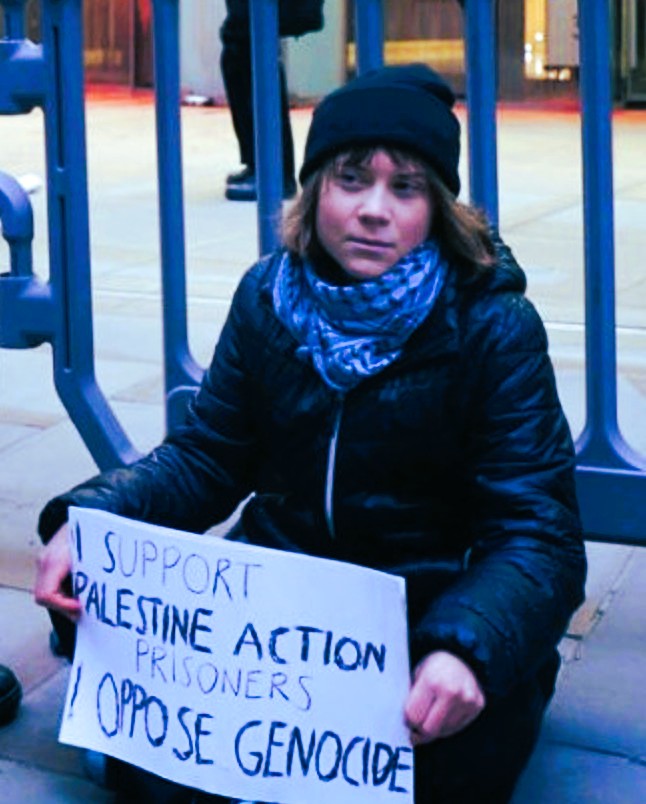
Meanwhile in London, climate activist Greta Thunberg was arrested at a protest after holding a sign supporting Palestine Action prisoners and opposing genocide.
Her arrest underscores a troubling pattern: peaceful dissent — especially dissent critical of Israel — is increasingly treated as a security threat. Future generations may struggle to understand why calling for an end to mass suffering was criminalized, even as world leaders carried on with business as usual.
Raids, Demolitions, and Displacement
In occupied East Jerusalem and the wider West Bank, Israeli occupation forces carried out raids, demolitions, and mass arrests.
- 24 Palestinians were wounded in East Jerusalem during joint police–IOF raid.
- Israeli occupation forces seized “unregulated eggs,” cigarettes, and vehicles — an operation framed as enforcement but resulting in live-fire injuries, beatings, and widespread tear gas exposure.
- In Silwan, a four‑story residential building housing 13 apartments was demolished, displacing numerous families. Human rights groups say the demolition occurred without warning, despite an upcoming meeting to discuss legalizing the structure.
- Across the West Bank, agricultural land was damaged, trees uprooted, and towns stormed by military vehicles and sniper teams.
Activists and Palestinian officials describe these actions as part of a systematic campaign of displacement — one that coincides with Israel’s approval of 19 new settlements, bringing this year’s total to 69.
Since October 2023, more than 1,102 Palestinians have been killed in the West Bank, with thousands more wounded or arrested.
Belgium Joins the Genocide Case at the ICJ
On the international stage, Belgium has formally joined South Africa’s genocide case against Israel at the International Court of Justice. Belgium’s intervention focuses on the interpretation of genocidal intent under the UN Genocide Convention.
The ICJ has already ordered Israel to prevent genocidal acts and allow humanitarian aid into Gaza — orders that remain unheeded as military operations continue.
The legal process will take years, but the political significance is immediate: more states are willing to challenge Israel’s conduct on the world stage.
So here we are, dear reader.
Israel invests in shaping global narratives through powerful media networks, while activists with cardboard signs and crayons are treated as threats. Organizations claiming to defend communities use the courts to silence critics. And on the ground, the occupation grinds on — raiding homes, seizing eggs and cigarettes, bulldozing buildings, and tightening its grip on Palestinian life.
Today it’s eggs and apartments. Tomorrow it will be something else.
The machinery of occupation never sleeps, and its purpose is clear: to make Palestinian existence ever more precarious.
Author: Mel Reese
EMAIL ADDRESS:
melreese72[at]outlook[dot]com
Today’s news cycle offers a revealing snapshot of how power operates — who gets shielded by it, who gets targeted by it, and who is crushed beneath it.
Rumors, Influence, and the Battle for Narrative Control
A rumor circulating online this month claimed that Israel had signed a $6 million contract with OpenAI to shape pro‑Israel content through ChatGPT. While there is no evidence of any direct deal with OpenAI, Israel’s partnerships with the German firm Havas Media Network and the U.S.-based digital strategy company Clock Tower X raise questions about how influence campaigns may indirectly shape the information ecosystem.
Even without a direct contract, the infrastructure of modern propaganda doesn’t need one. Influence today is outsourced, networked, and algorithmic.
Weaponizing the Courts: The Reginald D. Hunter Case
In the UK, comedian Reginald D. Hunter won a significant legal victory after a judge quashed a private prosecution brought by the Campaign Against Antisemitism (CAA).
District Judge Michael Snow ruled that the CAA’s attempt to prosecute Hunter for allegedly offensive messages was “abusive,” “misleading,” and intended not to seek justice but to “cancel” him.
The judge criticized the CAA for withholding key information — specifically, the complainant’s own antagonistic social media posts — and for failing to disclose that the organization was under investigation by the Charity Commission.
Hunter’s legal team accused the CAA of using the courts as a political weapon. The CAA, for its part, expressed disappointment and vowed to consider its next steps.
The case highlights a growing trend: institutions invoking the language of protection while engaging in political combat.
Greta Thunberg Arrested for Opposing Genocide
Meanwhile in London, climate activist Greta Thunberg was arrested at a protest after holding a sign supporting Palestine Action prisoners and opposing genocide.
Her arrest underscores a troubling pattern: peaceful dissent — especially dissent critical of Israel — is increasingly treated as a security threat. Future generations may struggle to understand why calling for an end to mass suffering was criminalized, even as world leaders carried on with business as usual.
Raids, Demolitions, and Displacement
In occupied East Jerusalem and the wider West Bank, Israeli occupation forces carried out raids, demolitions, and mass arrests.
- 24 Palestinians were wounded in East Jerusalem during joint police–IOF raid.
- Israeli occupation forces seized “unregulated eggs,” cigarettes, and vehicles — an operation framed as enforcement but resulting in live-fire injuries, beatings, and widespread tear gas exposure.
- In Silwan, a four‑story residential building housing 13 apartments was demolished, displacing numerous families. Human rights groups say the demolition occurred without warning, despite an upcoming meeting to discuss legalizing the structure.
- Across the West Bank, agricultural land was damaged, trees uprooted, and towns stormed by military vehicles and sniper teams.
Activists and Palestinian officials describe these actions as part of a systematic campaign of displacement — one that coincides with Israel’s approval of 19 new settlements, bringing this year’s total to 69.
Since October 2023, more than 1,102 Palestinians have been killed in the West Bank, with thousands more wounded or arrested.
Belgium Joins the Genocide Case at the ICJ
On the international stage, Belgium has formally joined South Africa’s genocide case against Israel at the International Court of Justice. Belgium’s intervention focuses on the interpretation of genocidal intent under the UN Genocide Convention.
The ICJ has already ordered Israel to prevent genocidal acts and allow humanitarian aid into Gaza — orders that remain unheeded as military operations continue.
The legal process will take years, but the political significance is immediate: more states are willing to challenge Israel’s conduct on the world stage.
So here we are, dear reader.
Israel invests in shaping global narratives through powerful media networks, while activists with cardboard signs and crayons are treated as threats. Organizations claiming to defend communities use the courts to silence critics. And on the ground, the occupation grinds on — raiding homes, seizing eggs and cigarettes, bulldozing buildings, and tightening its grip on Palestinian life.
Today it’s eggs and apartments. Tomorrow it will be something else.
The machinery of occupation never sleeps, and its purpose is clear: to make Palestinian existence ever more precarious.
Author: Mel Reese
EMAIL ADDRESS:
melreese72[at]outlook[dot]com