

A Week of Immigration Turmoil: Minnesota’s Standoff, Federal Overreach, and a Government Pushing Its Limits
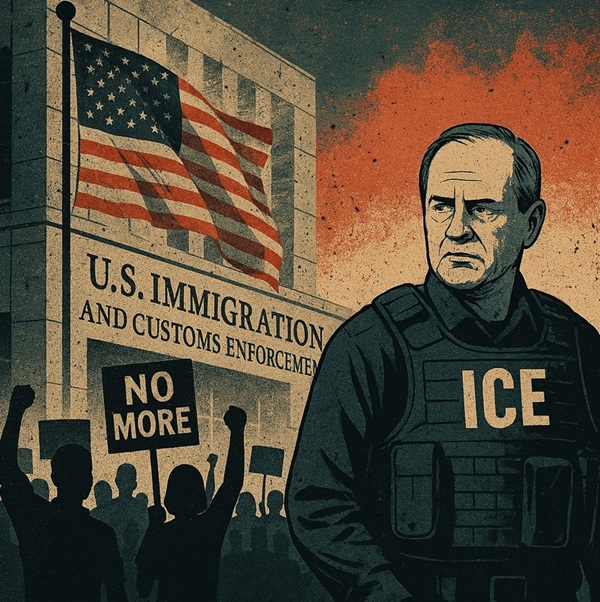
This past week has delivered a cascade of developments that reveal a federal immigration apparatus increasingly defined by improvisation, internal contradictions, and a growing disregard for constitutional boundaries. From Minnesota’s tense negotiations with federal authorities to court rulings blocking overreach at the national level, the pattern is becoming difficult to ignore.
Tom Homan’s Minnesota Visit: A “Good Cop” Attempt That Rings Hollow
Tom Homan, the White House’s newly installed “border czar,” arrived in Minnesota amid widespread backlash to the massive ICE surge deployed under Operation Metro Surge. State and local leaders — including Gov. Tim Walz and the mayors of Minneapolis and St. Paul — have been demanding a reduction in federal officers and are actively suing the Department of Homeland Security to halt its operations.
Homan publicly emphasized “meaningful dialogue” and hinted at a coming drawdown of federal officers, claiming that improved cooperation with state officials would allow ICE to shift toward “targeted, strategic enforcement.” He also urged protesters to “keep it peaceful,” framing public anger as an impediment to operational efficiency.
Yet his appearance did little to inspire confidence. Watching his televised remarks, it was hard to miss that he appeared to be reading from a script, unconvincing even to himself. The contrast with Greg Bovino’s earlier aggressive posture suggests a coordinated “good cop, bad cop” strategy — a softer face deployed after weeks of militarized tactics and public outrage.
Despite acknowledging that operations “haven’t been perfect,” including multiple recent shootings by federal agents, Homan made clear that enforcement will not stop. Instead, he promised to make it “safer” and “more efficient,” while continuing to blame the previous administration for the surge in undocumented immigration.
The message was unmistakable: the mission continues, only the tone has changed.
Federal Judge Blocks Operation PARRIS
A Rare Check on DHS Power in a significant rebuke, a federal judge temporarily halted DHS’s new Operation PARRIS — a program aimed at re‑examining the legal status of 5,600 recently resettled refugees in Minnesota who have not yet obtained permanent residency.
The court ordered DHS to:
- Immediately release all refugees detained under the operation
- Return those transferred out of state within five days
- Ensure no one is released into dangerous cold conditions
- Release individuals only to lawyers or approved contacts
A hearing is scheduled for February 19, but the ruling already underscores a troubling reality: federal agencies initiated a sweeping enforcement program targeting legally resettled refugees without clear statutory authority.
This is yet another example of a government willing to push past constitutional limits and ignore judicial boundaries. Even with the court’s intervention, DHS will continue pursuing its agenda through other channels.
Court Rules Secretary Kristi Noem Exceeded Her Authority on TPS
Another major legal setback came when the 9th U.S. Circuit Court of Appeals ruled that DHS Secretary Kristi Noem acted unlawfully in terminating Temporary Protected Status (TPS) for Venezuelans and Haitians.
The court affirmed that:
- The secretary does not have the authority to vacate an existing TPS designation
- Ending TPS early for hundreds of thousands of people violated the statute passed by Congress
Noem’s actions had already stripped legal protections from more than 268,000 Venezuelans and set expiration dates for over 350,000 Haitians. The ruling makes clear that DHS attempted to wield powers it simply did not have.
This ruling is yet another confirmation of a pattern: a federal government increasingly operating outside the law, pushing boundaries until courts intervene.
New DHS Directive: “Do Not Engage,” Use Megaphones, and Target Only Criminal Histories
A leaked internal directive revealed a dramatic shift in ICE enforcement strategy. Agents were instructed to:
- Focus exclusively on individuals with a criminal history
- “Verbalize every step” of arrests using megaphones
- Avoid all communication with protesters or bystanders
The memo explicitly states: “DO NOT COMMUNICATE OR ENGAGE WITH AGITATORS.”
This shift narrows enforcement priorities but also reflects a defensive posture — a government expecting confrontation and preparing for it.
But the presence of “agitators” is not a mystery. If federal agencies operated transparently, respected constitutional limits, and avoided sweeping, indiscriminate enforcement actions, the public would not be in the streets demanding accountability.
Conclusion: A Government Losing Its Legitimacy Through Its Own Actions
Taken together, these four developments paint a picture of a federal immigration system in disarray:
- Minnesota officials pushing back against an unprecedented federal surge
- Courts blocking DHS operations that overstep legal authority
- A DHS secretary found to have acted unlawfully in stripping legal protections
- New directives that treat public dissent as a threat rather than a democratic right
These are not isolated incidents. They are symptoms of a government increasingly willing to bypass constitutional norms, ignore judicial rulings, and expand its power through force rather than law.
And while officials like Tom Homan may attempt to soften the optics, the underlying strategy remains unchanged.
Author: Mel Reese
EMAIL ADDRESS:
melreese72[at]outlook[dot]com
This past week has delivered a cascade of developments that reveal a federal immigration apparatus increasingly defined by improvisation, internal contradictions, and a growing disregard for constitutional boundaries. From Minnesota’s tense negotiations with federal authorities to court rulings blocking overreach at the national level, the pattern is becoming difficult to ignore.
Tom Homan’s Minnesota Visit: A “Good Cop” Attempt That Rings Hollow
Tom Homan, the White House’s newly installed “border czar,” arrived in Minnesota amid widespread backlash to the massive ICE surge deployed under Operation Metro Surge. State and local leaders — including Gov. Tim Walz and the mayors of Minneapolis and St. Paul — have been demanding a reduction in federal officers and are actively suing the Department of Homeland Security to halt its operations.
Homan publicly emphasized “meaningful dialogue” and hinted at a coming drawdown of federal officers, claiming that improved cooperation with state officials would allow ICE to shift toward “targeted, strategic enforcement.” He also urged protesters to “keep it peaceful,” framing public anger as an impediment to operational efficiency.
Yet his appearance did little to inspire confidence. Watching his televised remarks, it was hard to miss that he appeared to be reading from a script, unconvincing even to himself. The contrast with Greg Bovino’s earlier aggressive posture suggests a coordinated “good cop, bad cop” strategy — a softer face deployed after weeks of militarized tactics and public outrage.
Despite acknowledging that operations “haven’t been perfect,” including multiple recent shootings by federal agents, Homan made clear that enforcement will not stop. Instead, he promised to make it “safer” and “more efficient,” while continuing to blame the previous administration for the surge in undocumented immigration.
The message was unmistakable: the mission continues, only the tone has changed.
Federal Judge Blocks Operation PARRIS
A Rare Check on DHS Power in a significant rebuke, a federal judge temporarily halted DHS’s new Operation PARRIS — a program aimed at re‑examining the legal status of 5,600 recently resettled refugees in Minnesota who have not yet obtained permanent residency.
The court ordered DHS to:
- Immediately release all refugees detained under the operation
- Return those transferred out of state within five days
- Ensure no one is released into dangerous cold conditions
- Release individuals only to lawyers or approved contacts
A hearing is scheduled for February 19, but the ruling already underscores a troubling reality: federal agencies initiated a sweeping enforcement program targeting legally resettled refugees without clear statutory authority.
This is yet another example of a government willing to push past constitutional limits and ignore judicial boundaries. Even with the court’s intervention, DHS will continue pursuing its agenda through other channels.
Court Rules Secretary Kristi Noem Exceeded Her Authority on TPS
Another major legal setback came when the 9th U.S. Circuit Court of Appeals ruled that DHS Secretary Kristi Noem acted unlawfully in terminating Temporary Protected Status (TPS) for Venezuelans and Haitians.
The court affirmed that:
- The secretary does not have the authority to vacate an existing TPS designation
- Ending TPS early for hundreds of thousands of people violated the statute passed by Congress
Noem’s actions had already stripped legal protections from more than 268,000 Venezuelans and set expiration dates for over 350,000 Haitians. The ruling makes clear that DHS attempted to wield powers it simply did not have.
This ruling is yet another confirmation of a pattern: a federal government increasingly operating outside the law, pushing boundaries until courts intervene.
New DHS Directive: “Do Not Engage,” Use Megaphones, and Target Only Criminal Histories
A leaked internal directive revealed a dramatic shift in ICE enforcement strategy. Agents were instructed to:
- Focus exclusively on individuals with a criminal history
- “Verbalize every step” of arrests using megaphones
- Avoid all communication with protesters or bystanders
The memo explicitly states: “DO NOT COMMUNICATE OR ENGAGE WITH AGITATORS.”
This shift narrows enforcement priorities but also reflects a defensive posture — a government expecting confrontation and preparing for it.
But the presence of “agitators” is not a mystery. If federal agencies operated transparently, respected constitutional limits, and avoided sweeping, indiscriminate enforcement actions, the public would not be in the streets demanding accountability.
Conclusion: A Government Losing Its Legitimacy Through Its Own Actions
Taken together, these four developments paint a picture of a federal immigration system in disarray:
- Minnesota officials pushing back against an unprecedented federal surge
- Courts blocking DHS operations that overstep legal authority
- A DHS secretary found to have acted unlawfully in stripping legal protections
- New directives that treat public dissent as a threat rather than a democratic right
These are not isolated incidents. They are symptoms of a government increasingly willing to bypass constitutional norms, ignore judicial rulings, and expand its power through force rather than law.
And while officials like Tom Homan may attempt to soften the optics, the underlying strategy remains unchanged.
Author: Mel Reese
EMAIL ADDRESS:
melreese72[at]outlook[dot]com