

Faith Is Personal, Liberty Is Public: The Founders’ True Intent - Religion Belongs in Homes, Not in Government
The Canadian province of Quebec plans to impose restrictions on public prayer and limit the exclusive offering of religion‑based menus, such as kosher and halal meals, in public institutions. This move is part of its latest effort to strengthen state secularism.
The “Secularism 2.0” changes come through a new bill introduced by the governing Coalition Avenir Quebec, expanding a 2019 religious symbols law that prevents judges, police officers, teachers, and public servants from wearing the kippah, turban, or hijab while at work.
After reading this news — which I fully support — I wrote the following comment: Religion and faith are personal and should never be institutionalized. I believe they should remain within the private sphere of one’s home and not be part of public policy or debate.
In response, an MSN board member named C.J. argued that the U.S. Constitution was crafted by deeply religious Founders, suggesting my view is incompatible with their intent.
I replied: The Constitution was signed because it kept government secular. It bans religious tests for office (Article VI) and protects personal faith in the First Amendment. The Founders’ diverse beliefs — from Christians to Deists — made clear that liberty, not church authority, was the foundation of America.
This reply directly counters C.J.’s claim by pointing out that the Founders did sign a secular Constitution, while keeping my original point intact: religion is personal, not institutional.
Historical Context
Those who agree with C.J.’s claim should take a closer look at the links between the U.S. Constitution, the Bill of Rights, and religion. Many of the 55 delegates to the Constitutional Convention were not traditionally religious, and religion was never intended to be a governing force in our Republic. The Constitution protects the freedom of individuals to practice their faith, but it does not grant authority to churches or religious institutions to act as parallel powers or interfere in civic life.
Supporting Facts:
- No mention of God in the Constitution: Unlike the Declaration of Independence, which references a “Creator,” the Constitution deliberately avoids religious language.
- Article VI – No religious tests: It explicitly states that “no religious Test shall ever be required as a Qualification to any Office or public Trust under the United States.”
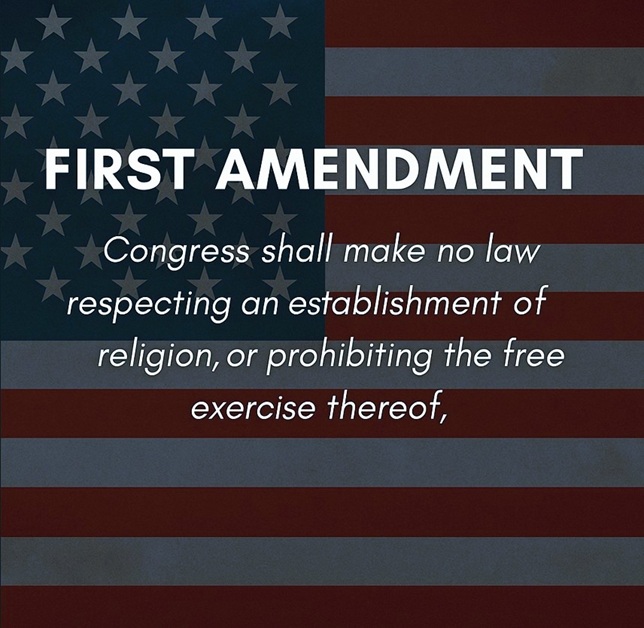
- First Amendment protections: The Establishment Clause and Free Exercise Clause guarantee both government neutrality toward religion and freedom of individual practice.
- Jefferson and Madison’s advocacy: Jefferson’s Virginia Statute for Religious Freedom and Madison’s Memorial and Remonstrance Against Religious Assessments strongly influenced the First Amendment.
- Diverse beliefs among the Founders: Some were devout Christians, while others like Jefferson and Franklin were Deists, skeptical of organized religion.
Why This Matters
- The Constitution’s silence on God, its ban on religious tests, and the First Amendment’s protections all confirm that religion was not meant to be part of the Republic’s governing framework.
- The Founders’ varied beliefs show that the Constitution was designed to protect individual liberty, not empower religious institutions.
Conclusion
The relationship between the U.S. Constitution, the Bill of Rights, and religion deserves careful examination. The framers deliberately avoided establishing religion as a governing force. Article VI prohibits religious tests for office, and the First Amendment guarantees both freedom of religion and freedom from government‑imposed religion. Jefferson and Madison’s writings reinforced that faith must remain a matter of personal conscience, not state power.
In short, the Constitution protects the rights of individuals to worship freely, but it does not empower churches to act as parallel institutions or interfere in civic life. The Founders sought a government rooted in liberty, not in religious authority.
Author: Mel Reese
EMAIL ADDRESS:
melreese72[at]outlook[dot]com
The Canadian province of Quebec plans to impose restrictions on public prayer and limit the exclusive offering of religion‑based menus, such as kosher and halal meals, in public institutions. This move is part of its latest effort to strengthen state secularism.
The “Secularism 2.0” changes come through a new bill introduced by the governing Coalition Avenir Quebec, expanding a 2019 religious symbols law that prevents judges, police officers, teachers, and public servants from wearing the kippah, turban, or hijab while at work.
After reading this news — which I fully support — I wrote the following comment: Religion and faith are personal and should never be institutionalized. I believe they should remain within the private sphere of one’s home and not be part of public policy or debate.
In response, an MSN board member named C.J. argued that the U.S. Constitution was crafted by deeply religious Founders, suggesting my view is incompatible with their intent.
I replied: The Constitution was signed because it kept government secular. It bans religious tests for office (Article VI) and protects personal faith in the First Amendment. The Founders’ diverse beliefs — from Christians to Deists — made clear that liberty, not church authority, was the foundation of America.
This reply directly counters C.J.’s claim by pointing out that the Founders did sign a secular Constitution, while keeping my original point intact: religion is personal, not institutional.
Historical Context
Those who agree with C.J.’s claim should take a closer look at the links between the U.S. Constitution, the Bill of Rights, and religion. Many of the 55 delegates to the Constitutional Convention were not traditionally religious, and religion was never intended to be a governing force in our Republic. The Constitution protects the freedom of individuals to practice their faith, but it does not grant authority to churches or religious institutions to act as parallel powers or interfere in civic life.
Supporting Facts:
- No mention of God in the Constitution: Unlike the Declaration of Independence, which references a “Creator,” the Constitution deliberately avoids religious language.
- Article VI – No religious tests: It explicitly states that “no religious Test shall ever be required as a Qualification to any Office or public Trust under the United States.”
- First Amendment protections: The Establishment Clause and Free Exercise Clause guarantee both government neutrality toward religion and freedom of individual practice.
- Jefferson and Madison’s advocacy: Jefferson’s Virginia Statute for Religious Freedom and Madison’s Memorial and Remonstrance Against Religious Assessments strongly influenced the First Amendment.
- Diverse beliefs among the Founders: Some were devout Christians, while others like Jefferson and Franklin were Deists, skeptical of organized religion.
Why This Matters
- The Constitution’s silence on God, its ban on religious tests, and the First Amendment’s protections all confirm that religion was not meant to be part of the Republic’s governing framework.
- The Founders’ varied beliefs show that the Constitution was designed to protect individual liberty, not empower religious institutions.
Conclusion
The relationship between the U.S. Constitution, the Bill of Rights, and religion deserves careful examination. The framers deliberately avoided establishing religion as a governing force. Article VI prohibits religious tests for office, and the First Amendment guarantees both freedom of religion and freedom from government‑imposed religion. Jefferson and Madison’s writings reinforced that faith must remain a matter of personal conscience, not state power.
In short, the Constitution protects the rights of individuals to worship freely, but it does not empower churches to act as parallel institutions or interfere in civic life. The Founders sought a government rooted in liberty, not in religious authority.
Author: Mel Reese
EMAIL ADDRESS:
melreese72[at]outlook[dot]com