
Justice, Selectively Applied: Jewish Power and Dissent in America
In recent weeks, three very different stories have emerged that, when viewed together, paint a troubling picture of how justice is applied in the United States — and who ultimately benefits from its selective enforcement.
Donna Hughes-Brown, a 58-year-old British-born grandmother, has lived legally in the U.S. for nearly half a century. Despite her long-standing residency and family ties, she now faces deportation over a $22 bad check written nearly a decade ago — a misdemeanor for which she already served probation and repaid her debt.
After being detained by ICE in July, she remains locked in a Kentucky detention center, denied bond because of the sweeping powers granted under the “Big Beautiful Bill.” Her deportation hearing looms, threatening to send her back to UK, a place she hasn’t lived in since childhood.
Contrast Hughes-Brown’s ordeal with the case of Joel Bowman, a Jewish man who opened fire outside his former Jewish school in Memphis, Tennessee, in 2023. Armed and dangerous, Bowman fired shots at a contractor, pointed his weapon at police, and even broke into a private home on the same day. Yet, after recovery from being shoot after pointing gun at police and pleading guilty, he avoided prison and was sentenced to eight years’ probation. His punishment raises eyebrows — especially when compared to others who face far harsher consequences for far lesser offenses.
Consider, for example, Carlos Portugal Gouvea, a visiting Harvard Law professor who fired a pellet gun near a Jewish synagogue while claiming to hunt rats month ago. Though authorities and synagogue leaders said the act did not appear antisemitic, DHS labeled it as such, revoked his visa, and forced him to return to Brazil. The disparity between Bowman’s probation and Gouvea’s deportation underscores the inconsistency — and perhaps the political motivations — behind these decisions.
The third story comes from inside the Department of Justice itself. Nine career attorneys resigned after being pressured by Trump administration officials to conclude — before investigations even began — that the University of California had violated the civil rights of Jewish students. These attorneys described chaotic directives, predetermined outcomes, and demands for billion-dollar fines and sweeping policy changes. Universities, facing frozen grants and threats of financial ruin, were cornered into settlements. As one attorney put it, “The threats, they are working.”
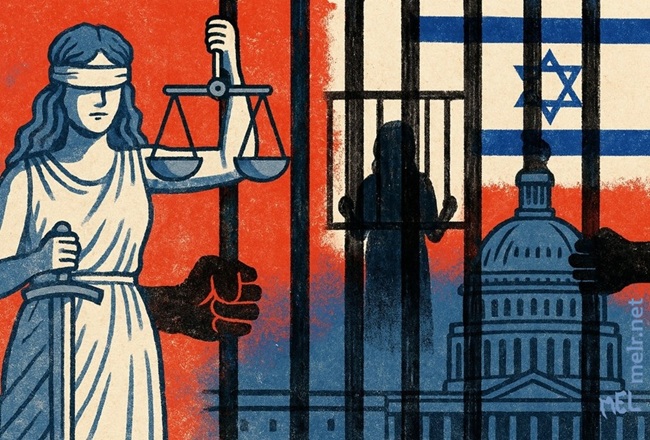
These cases reveal a disturbing pattern: justice is not blind but is wielded as a tool of political and ideological enforcement. A grandmother is detained over a decades-old misdemeanor, while an armed gunman avoids prison probably because he's Jewish. A professor is deported for firing a pellet gun because DHS characterized his act as attack on Jewish community, while DOJ attorneys are pressured to weaponize civil rights law against universities to reward Jewish students who were apparently in danger by other Jewish pro-Palestinian students.
The common thread is Jewish power — they have it, they benefit from it, and whoever is against is punished when dissent. Laws like the “Big Beautiful Bill” are adopted by AIPAC recipients on both sides of the aisle to strip judges of authority and expand DHS powers, leaving individuals like Hughes-Brown and anyone who stand against Israel's genocide in Palestine unable to fight for their freedom, while others are bullied into compliance under the guise of protecting harmony.
Is there anyone who can stop this? I fear not. Those who could have acted in favor instead enabled these expansions of authority, leaving ordinary people vulnerable to selective justice. The result is a system where punishment is not about the crime, but about whether one aligns with the prevailing political and geopolitical interests.
Bravo, indeed — but only for those who benefit from this imbalance. For the rest, it is a chilling reminder that justice in America is increasingly conditional.
Author: Mel Reese
EMAIL ADDRESS:
melreese72[at]outlook[dot]com
In recent weeks, three very different stories have emerged that, when viewed together, paint a troubling picture of how justice is applied in the United States — and who ultimately benefits from its selective enforcement.
Donna Hughes-Brown, a 58-year-old British-born grandmother, has lived legally in the U.S. for nearly half a century. Despite her long-standing residency and family ties, she now faces deportation over a $22 bad check written nearly a decade ago — a misdemeanor for which she already served probation and repaid her debt.
After being detained by ICE in July, she remains locked in a Kentucky detention center, denied bond because of the sweeping powers granted under the “Big Beautiful Bill.” Her deportation hearing looms, threatening to send her back to UK, a place she hasn’t lived in since childhood.
Contrast Hughes-Brown’s ordeal with the case of Joel Bowman, a Jewish man who opened fire outside his former Jewish school in Memphis, Tennessee, in 2023. Armed and dangerous, Bowman fired shots at a contractor, pointed his weapon at police, and even broke into a private home on the same day. Yet, after recovery from being shoot after pointing gun at police and pleading guilty, he avoided prison and was sentenced to eight years’ probation. His punishment raises eyebrows — especially when compared to others who face far harsher consequences for far lesser offenses.
Consider, for example, Carlos Portugal Gouvea, a visiting Harvard Law professor who fired a pellet gun near a Jewish synagogue while claiming to hunt rats month ago. Though authorities and synagogue leaders said the act did not appear antisemitic, DHS labeled it as such, revoked his visa, and forced him to return to Brazil. The disparity between Bowman’s probation and Gouvea’s deportation underscores the inconsistency — and perhaps the political motivations — behind these decisions.
The third story comes from inside the Department of Justice itself. Nine career attorneys resigned after being pressured by Trump administration officials to conclude — before investigations even began — that the University of California had violated the civil rights of Jewish students. These attorneys described chaotic directives, predetermined outcomes, and demands for billion-dollar fines and sweeping policy changes. Universities, facing frozen grants and threats of financial ruin, were cornered into settlements. As one attorney put it, “The threats, they are working.”
These cases reveal a disturbing pattern: justice is not blind but is wielded as a tool of political and ideological enforcement. A grandmother is detained over a decades-old misdemeanor, while an armed gunman avoids prison probably because he's Jewish. A professor is deported for firing a pellet gun because DHS characterized his act as attack on Jewish community, while DOJ attorneys are pressured to weaponize civil rights law against universities to reward Jewish students who were apparently in danger by other Jewish pro-Palestinian students.
The common thread is Jewish power — they have it, they benefit from it, and whoever is against is punished when dissent. Laws like the “Big Beautiful Bill” are adopted by AIPAC recipients on both sides of the aisle to strip judges of authority and expand DHS powers, leaving individuals like Hughes-Brown and anyone who stand against Israel's genocide in Palestine unable to fight for their freedom, while others are bullied into compliance under the guise of protecting harmony.
Is there anyone who can stop this? I fear not. Those who could have acted in favor instead enabled these expansions of authority, leaving ordinary people vulnerable to selective justice. The result is a system where punishment is not about the crime, but about whether one aligns with the prevailing political and geopolitical interests.
Bravo, indeed — but only for those who benefit from this imbalance. For the rest, it is a chilling reminder that justice in America is increasingly conditional.
Author: Mel Reese
EMAIL ADDRESS:
melreese72[at]outlook[dot]com